

Hamburgers in Hamburg: The Fifty-Year Return of a Culinary Ghost

By Dirk Ebener – May 8, 2026

Hamburg’s fog settles in, carrying the scent of rusted iron and smoky grilled meat. For years, I’ve searched for the elusive 'Hamburger' across the globe, always curious if its spirit remains here or has become an American icon searching for its roots. Enjoy reading "Hamburgers in Hamburg: The Fifty-Year Return of a Culinary Ghost".
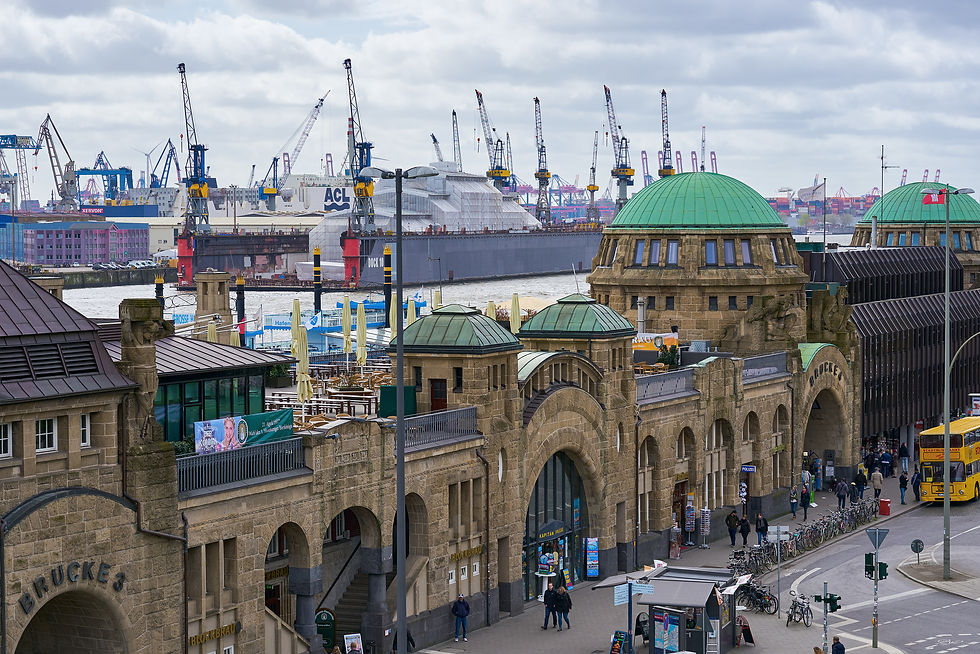
At Landungsbrücken, I watched huge container ships move quietly through the mist, their foghorns sounding in the distance. This place is full of history—millions once stood here with one-way tickets to New York, carrying recipes and hope. Eating a burger here feels like connecting with the city’s past.
Traveling with purpose means looking past neon signs and big chains to find what makes a city unique. While fast food spread everywhere, Hamburg kept its own tradition of meat and bread, making it more than just a quick meal.
Hamburg grew wealthy from spices, coffee, and silk, but its most famous export is its name. To learn the real story, I started my search in the busy, gritty harbor.
The Harbor Grit: Bobby’s Bremsklotz
I began my journey in the harbor, where Hamburg feels most alive. This isn’t the city of tall buildings and business leaders, but the world of dockworkers who keep goods moving.
Hidden among shipping containers, Bobby’s Bremsklotz is more than just a food stand. It’s a place where people gather for a quick meal and honest conversation.
'Bremsklotz' means 'brake block,' the heavy piece that stops a train or ship. The name makes sense. The food here is solid and filling. When you order a burger, you get a piece of history, not just a photo opportunity.
At Bobby’s, the burger patty is thick and hand-shaped, cooked on a well-used grill. Instead of a brioche bun, your burger comes in a Rundstück, a traditional round roll. In the 1800s, 'Rundstück warm' was a popular snack in Hamburg: roast pork or a meat patty in a roll with gravy.
When you bite into Bobby’s burger, you notice its history. The crunchy roll gives way to a peppery, juicy center. Surrounded by the sounds and smells of the harbor, you realize this burger was made for people on the go. It’s simple, filling, and true to its roots.
Hamburger Architecture of the Modern Era: The Legend of Jim Block
To see why Hamburg loves burgers so much, you need to know about Eugen Block. He turned a local specialty into a well-known tradition. While many know the "Block House" steakhouse, locals remember Jim Block.
In the 1970s, American fast-food chains spread worldwide, making burgers thin and mass-produced. Eugen Block wanted to restore quality to Hamburg’s famous sandwich by focusing on high-quality meat.
In 1973, he opened the first "Jim Block" restaurant. He offered more than just sandwiches—he shared his values. He used top-quality beef from his own butcheries, making sure the meat was always fresh and carefully sourced.
For fifty years, Jim Block has set the standard. For many in Hamburg, the 1970s were when the American-style burger returned home, improved for local tastes. Block knew that people here wanted a better burger, not just a faster one.
He introduced the concept of the "Premium BuHe brought the idea of the "Premium Burger" to Hamburg before it was popular elsewhere. Today, when you visit Jim Block, you see all kinds of people—students, professionals, and older couples—enjoying a tradition that began fifty years ago. It connects the old harbor snack with today’s gourmet trends

Burgerlich in the modern Gänsemarkt area
After leaving the busy harbor, I found Burgerlich in the modern Gänsemarkt area. Here, tradition and technology come together. The restaurant is simple and stylish, with digital tablets at each table for easy ordering.
At first, you might worry that technology would take away from the burger’s tradition. But Burgerlich proves that new tools can respect old ways. Their burgers are carefully made, with attention to detail. I ordered a classic and watched the staff prepare the beef with real care.
Everything is balanced here: tangy house pickles, crisp red onions, and a secret sauce that brings it all together. The bun is soft yet sturdy, holding in the patty's juices. This shows Hamburg’s talent for mixing tradition with new ideas, keeping the 'Jim Block' spirit alive for people who want both speed and quality.
Nearby, the Isemarkt sits under the elevated railway. It’s more than just a market—it’s a place where people have bought fresh food from vendors since 1949.

Hamburg Fish Markets
The market spans a kilometer under the train line, hosting over 200 vendors and drawing 6,000 visitors every Tuesday and Friday morning.
At Isemarkt, trains rumble above, vendors shout their offers, and the air quickly changes from sweet flowers to the smoky smell of eel.
As I walked through the market, I found Feakydellen—a modern take on 'Frikadelle,' the pan-fried meat patty that many say is the original hamburger. Before burgers, there was Frikadelle, made with onions, parsley, and breadcrumbs, a classic in German kitchens for generations.
At Feakydellen, old and new come together. Their burger looks modern but tastes like something from Germany’s past. The meat is seasoned with a special blend of spices, reminiscent of the classic Frikadelle.
When you take a bite, surrounded by the busy market, you realize the 'Hamburger' never really left Hamburg. It just changed with the times. This meal brings together flavors from the 1940s, the 1970s, and today.
Five Practical Tips for the Hamburg Burger Explorer
Arrive at Isemarkt by 8:30 am to avoid crowds. For Feakydellen’s Frikadelle, get there before noon—they sell out early.
Cash is still king at the Imbiss. While Burgerlich accepts digital payments, most Hamburg harbor stands and market stalls prefer cash. Bring some euros, or you might miss out on a burger.
Appreciate the Rundstück. In America, the bun is often just a soft base, but in Hamburg, the bread is just as important as the meat. If you see a 'traditional roll,' try it—the chewy crust goes perfectly with juicy beef.
The "Block House" Baseline: If you are overwhelmed by choices, look for the "Block House" seal on a menu. It signifies that the meat comes from the Block family’s butcheries. It is the gold standard for beef quality in Northern Germany and has been for 50 years.
Take a walk after eating a big burger at Bobby’s Bremsklotz. Instead of taking the U-Bahn, stroll along the Elbpromenade toward Speicherstadt, the city’s famous warehouse district. The fresh air and steady pace will help you enjoy both your meal and Hamburg’s history.
Reflection: The Circle Closes
As I finished my last bite at Isemarkt, a train rumbled overhead, shaking the table. Nearby, a child held a burger with both hands, juice dripping to the ground—just as kids probably did fifty years ago at Jim Block’s and a hundred years ago with a Rundstück warm.
In that moment, I realized that 'Travel That Makes Sense' isn’t about finding the most expensive meal or the most popular attraction. It’s about connecting the past and present. Here, the Hamburger is more than just food—it shows Hamburg’s place as a gateway to the world.
From the grease-streaked hands at Bobby’s to the digital finesse of Gänsemarkt and the vibrant pulse of Isemarkt, Hamburg has reclaimed its namesake with bold, delicious pride. I arrived searching for a burger and discovered a city utterly sure of itself. From the hardworking cooks at Bobby’s to the modern style of Gänsemarkt and the lively Isemarkt,
Hamburg has proudly taken back its famous name. I came looking for a burger and found a city confident in its identity, one handmade patty at a time. The Hamburger has truly returned home.

Dirk Ebener is the founder and creator behind the Food Blogger Journey website, and author of “Travel That Makes Sense”, drawing on over 40 years of international travel across more than 60 countries. His global adventures have deepened his understanding of regional cuisines, local customs, and the powerful connection between food and culture. From bustling street markets in Asia to quiet vineyard dinners in Europe, Dirk captures authentic culinary experiences through immersive storytelling. Through Food Blogger Journey, he invites readers to explore the world one dish and step at a time.
© 2025-2026 Food Blogger Journey. All rights reserved. The experiences, opinions, and photos this blog shares are based on personal travel and culinary exploration. Reproduction or distribution of content without written permission is prohibited.
Follow the journey on Instagram @FoodBloggerJourneys.
Interesting Hashtags
#Hamburg #Fischmarkt #Landungsbrücken #StPauli #HamburgersinHamburg #TravelThatMakesSense #FoodBloggerJourneys #Isemarkt #Gänsemarkt


xổ số plus dạo này mình thấy bạn bè nhắc hoài nên cũng ghé thử cho biết, chủ yếu xem họ trình bày ra sao chứ không có ngồi canh số. Vào trang thấy họ để tiêu đề theo kiểu nhóm ngày khá dễ lần, kiểu “XSMB Chủ Nhật” rồi có bài “XSMB ngày 19 07 2026” nhìn phát nhận ra liền nên khỏi phải kéo tìm mệt. Mình lướt xuống dưới thì thấy có khối “Đầu Lô tô Đuôi Lô tô” dạng bảng cột, chữ không bị nhồi quá nên đọc nhanh cũng ổn. Nói chung cảm giác bố cục gọn gàng, mấy phần dữ liệu tách thành từng box rõ ràng, nhất là cái bảng “Đầu Lô tô…
https://keonhacai5.com/ mình ghé thử cho biết vì thấy bạn bè nhắc, kiểu vào xem giao diện thôi. Ấn tượng đầu là trang chia khối nội dung khá gọn, nhìn lướt không bị ngợp chữ. Mình có dừng lại ở bài Girona vs Athletic Bilbao (03h00 ngày 05/11), tiêu đề để nổi nên kéo xuống phát là thấy ngay, đoạn nhận định cũng ngắn gọn nên đọc nhanh hiểu ý. Mấy phần tỉ lệ/kèo trình bày theo cột, spacing thoáng nên không phải nheo mắt như vài site khác. Thanh menu đặt chỗ dễ thấy, chuyển qua lại giữa bài đang xem cũng mượt. Nói chung mình thích cách họ căn lề và chia box thông tin, nhìn sạch và dễ…
ga vang tv dạo này mình thấy có người nhắc tới khi nói về các nền tảng giải trí trực tuyến nên cũng thử mở vào xem cách họ bố trí giao diện ra sao. Mình không đi sâu vào nội dung hay từng trò cụ thể, mà chủ yếu quan sát cách các chuyên mục được phân chia trên trang và cách thông tin hiển thị cho người dùng. Nhìn tổng thể thì các khu như thể thao, casino, game bài hay slot thường được sắp xếp theo từng nhóm khá rõ, hiển thị dạng khối và danh sách nên lướt qua cũng dễ theo dõi. Các bảng dữ liệu được trình bày dạng cột khá gọn, giúp quan…
I was looking at fish, coffee, tea, and not necessarily hamburgers. Great article.