

City Guide Series: Bamberg, Germany - Beer, History, and Franconian Flavors”

Updated: Jan 18
By Dirk Ebener - January 16, 2026

Travel has always been my window into understanding culture, history, and food. I grew up in Germany. My first journeys often took me to small medieval towns that seemed untouched by time. By 16, I was already venturing beyond Europe into Asia and Northern Africa. In each place, I learned how cultures express themselves through flavors and traditions. Cities in Germany have always fascinated me, and Bamberg has always felt special. A place where history, regional cuisine, and beer culture converge.
I still remember my first visit to Bamberg: walking cobblestoned streets between medieval houses, standing by the Regnitz River as the sun set behind the cathedral towers, and breathing in the smoky aroma of beer from centuries-old taverns. Each return visit deepens my appreciation. Bamberg is not just another German town. It’s a living museum. Here, every sip of beer and every bite of food tell a story.
To me, food and travel are inextricably linked. Bamberg was one of the first cities where I truly grasped this concept. Meals there were not just nourishment. They were lessons in history, geography, and tradition. Every plate of Schäuferla (pork shoulder) or bowl of hearty Franconian potato soup reminded me that food links past and present. Travel, to me, is about connecting with people. In Bamberg, those connections are easy to forge—at a brewery bench, riverside café, or while sharing stories of the city’s past.
That is why Bamberg stands out as one of my favorite German destinations. It weaves together the storybook charm of a UNESCO World Heritage city with the inviting embrace of Franconian hospitality. For beer lovers, Bamberg is not just a stop on the map—it is a pilgrimage, a place where every pint feels like a rite of passage. Enjoy reading City Guide Series: "Bamberg, Germany - Beer, History, and Franconian Flavors”
The History of Bamberg
Bamberg’s history stretches back over a thousand years. It became a UNESCO World Heritage Site in 1993. Much of the old town remains intact. You will find medieval streets, half-timbered houses, and seven hills crowned by churches that often invite comparisons with Rome.
The city became important in the early Middle Ages. Emperor Henry II made it a bishopric in 1007. The 13th-century cathedral houses the only papal grave outside Italy. For centuries, Bamberg has grown into a cultural and intellectual center. Monasteries, artisans, and later breweries shaped its identity.
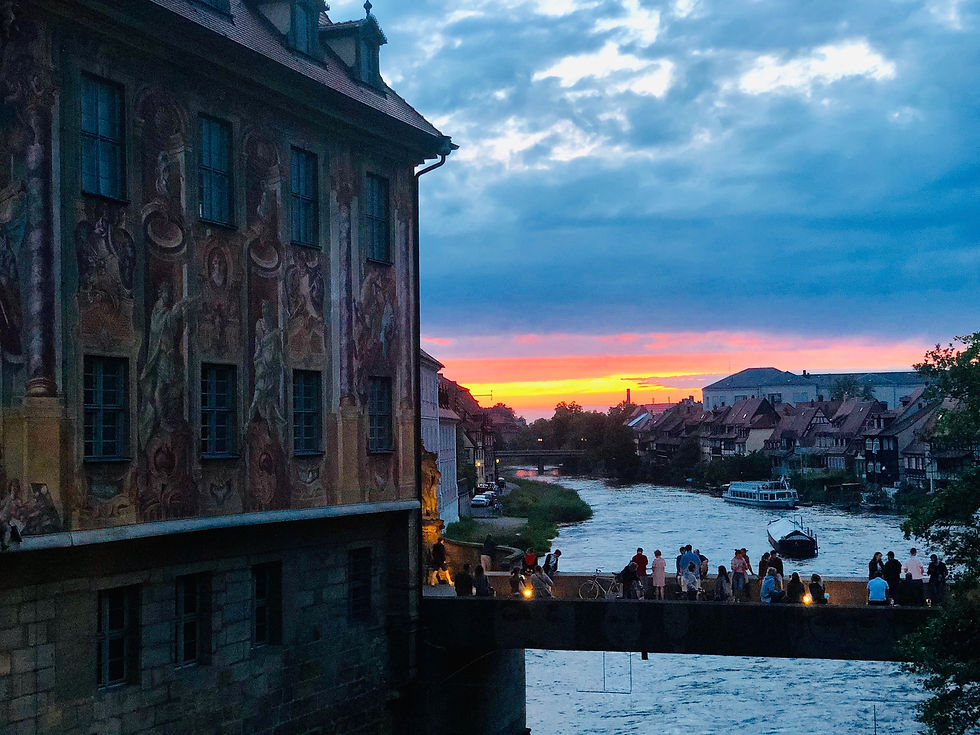
Today, wandering through Bamberg is like slipping through a portal to another era. Cross the iconic Altes Rathaus, perched boldly on its bridge above the Regnitz, or climb to Altenburg Castle and let your gaze sweep across the rolling Franconian countryside—each moment feels touched by history.
Bamberg was spared large-scale destruction during World War II. This is why its medieval and baroque architecture remains so intact. Walking through the old town, visitors encounter the same streets and buildings used by merchants, monks, and townsfolk centuries ago. In the 18th century, Bamberg flourished under the rule of the Prince-Bishops. They invested in the arts, leaving behind opulent residences and sculptures that still decorate the city.

The Neue Residenz Palace and its rose garden highlight Bamberg’s baroque splendor. They offer not only history but breathtaking views across the rooftops of the old town. The city gained fame during the Enlightenment, when Bamberg’s intellectuals and publishers spread new ideas across Europe. Its university, founded in 1647, made Bamberg a center of learning.
Bamberg’s waterways have shaped the city for centuries. The Regnitz River divides the town.
The Main-Danube Canal links it to Europe’s great trade routes. The "Little Venice" quarter, once home to fishermen, charms visitors with colorful half-timbered houses lining the water.
Religious devotion, intellect, and mercantile activity combined to give Bamberg its unique blend of sacred and worldly influence.
Even now, Bamberg pulses with its own unique identity. It is both a vibrant regional hub and a sparkling cultural jewel. Festivals, concerts, and age-old brewery traditions breathe life into its storied past. For centuries, the city has danced gracefully between tradition and transformation. Bamberg is not simply a relic of the Middle Ages; it is a place where history is alive and ever-present.
The Story of Beer in Bamberg

Beer and Bamberg are inseparable. This city is the undisputed capital of Franconian beer culture. It boasts about 11 breweries within the city and nearly 70 in the surrounding region. This is the highest concentration of breweries in the world.
Bamberg is famous for its Rauchbier (smoked beer). It is brewed using malt dried over beechwood flames. The result is a smoky aroma that evokes memories of smoked meats or campfires for many. The most iconic version comes from Schlenkerla Brewery. Here, the beer is served from wooden barrels in a tavern that feels unchanged since the Middle Ages.
Rauchbier is only the beginning. Bamberg’s breweries pour a dazzling array of styles—Märzen, Kellerbier, Bocks, and beyond. Here, brewery-hopping is a journey through time, where every glass brims with centuries of craft and tradition. Each sip uncovers a fresh page in Bamberg’s unfolding beer saga.
Local and Regional Meals
Bamberg is not only about beer. Its food is deeply tied to Franconian identity. Some must-try dishes include:

Schäufele: A roasted pork shoulder with crispy skin, often served with potato dumplings and sauerkraut.
Bamberger Zwiebel: A baked onion stuffed with minced meat and soaked in dark beer sauce.
Carp (Karpfen): A specialty in the surrounding Franconian Switzerland region, often baked or fried.
Bamberger Hörnla: A local potato variety, protected by EU status, known for its nutty flavor and used in traditional salads.
Obatzda: A cheese spread with Camembert, butter, and spices, typically paired with beer in a brewery garden.
Pair these hearty dishes with a Rauchbier or Kellerbier from a local brewery, and you will taste the very essence of Franconia—a legacy of flavor passed down through generations.
Three Historic Stories from Bamberg
1. The Witch Trials of Bamberg
In the early 1600s, Bamberg was the site of some of the most infamous witch trials in Europe. Hundreds of people were accused, imprisoned, and executed under suspicion of witchcraft. The Bamberg “Drudenhaus” (witch prison) became notorious, and today this dark chapter serves as a reminder of the dangers of fear and superstition.
2. The Old Town Hall on the Bridge
Legend says Bamberg’s bishop refused to grant land for the construction of a town hall, so the townspeople built it on an island in the river instead. The result was the Altes Rathaus, one of Germany’s most picturesque buildings, its half-timbered façade rising dramatically from the Regnitz.
3. Napoleon and Altenburg Castle
During the Napoleonic Wars, Altenburg Castle was converted into a French military post. While the fortress has stood since the 12th century, its role in housing soldiers during Napoleon’s campaigns left a mark on local memory. Today, Altenburg is a beloved landmark offering sweeping views over Bamberg and beyond.

Actionable Travel & Food Advice
Start with Schlenkerla: For your first Rauchbier experience, visit Schlenkerla in the old town. Order the classic Aecht Schlenkerla Märzen, and embrace the smoky surprise.
Take a Brewery Tour: Many local breweries offer guided tours that explain the brewing process while giving you generous tastings.
Try the Bamberger Zwiebel: It’s hearty, rich, and perfectly paired with a dark beer.
Walk the Seven Hills: Each hill has its own church, and walking them offers a unique blend of history and incredible views.
Visit the Bamberg Cathedral: Don’t miss the Bamberg Horseman statue, a mysterious medieval equestrian figure whose identity remains a subject of debate.
Day Trip to Franconian Switzerland: Explore small breweries and enjoy regional carp dishes.
Book Accommodation Early: Bamberg is a popular destination, especially during beer festivals and Christmas markets.
Christmas in Bamberg: The city’s markets transform into a winter wonderland, brimming with the scent of mulled wine, the crunch of roasted nuts, and an irresistible holiday spirit.
Bike the Beer Trails: The countryside around Bamberg has marked cycling routes that link breweries—a perfect combination of exercise and indulgence.
Final Thoughts
Bamberg is more than a postcard-perfect German town. It is a living canvas, painted with history, faith, architecture, food, and, above all, beer. As you wander its winding streets, the centuries seem to gather around you—cathedrals and castles, taverns and cobblestones, stories of tragedy and triumph all whispering from the stones.
For travelers hungry for authentic flavors and timeless traditions, remember: Bamberg is a place to savor slowly. Sip its Rauchbier, relish Schäuferla, listen to the city’s stories, and let its charm linger long after you leave. These are the true treasures of your visit.
In Bamberg, take away more than memories—carry with you the stories in every glass raised, every shared meal, and every tradition experienced firsthand. The living history of Bamberg is felt in these moments and will stay with you long after you’ve left.

Dirk Ebener is the founder and creator behind the Food Blogger Journey website, drawing on over 40 years of international travel across more than 60 countries. His global adventures have deepened his understanding of regional cuisines, local customs, and the powerful connection between food and culture. From bustling street markets in Asia to quiet vineyard dinners in Europe, Dirk captures authentic culinary experiences through immersive storytelling. Through Food Blogger Journey, he invites readers to explore the world one dish at a time.
© 2025 Food Blogger Journey. All rights reserved. The experiences, opinions, and photos this blog shares are based on personal travel and culinary exploration. Reproduction or distribution of content without written permission is prohibited.
Follow the journey on Instagram @FoodBloggerJourneys.
Interesting Hashtags


I was stationed in Germany, and always fascinated of the history, hospitality, and food and beer traditions. This article and the photos are a wonderful reminder. I hope to go back to Germany in two or three years. Bamberg will be on the travel list. I like German food and beer, and there will be plenty of beer choices in Bamberg. Thanks again for the article.